


A (long) while back when I fitted the 2.4 intake manifold to the Speedster, I also tried the 65mm throttlebody that the 2.4 engine uses. This turned out not to work, constantly throwing P1514 errors. As the electronic throttle valve plays a very important role in the ECU there are loads of protections in the ECU to guard for error situations. Not only is there a dual feedback to the ECU on the throttle body position, but the paths to actuate the throttle valve are also redundant. In the ECU are a number of software guards to make sure the throttle valve is behaving like is modelled in the ECU. This is why it isn't possible to just change the throttle valve on this engine without ECU modifications. So today we started off with an upgrade of the ECU software to the latest version from Peter. 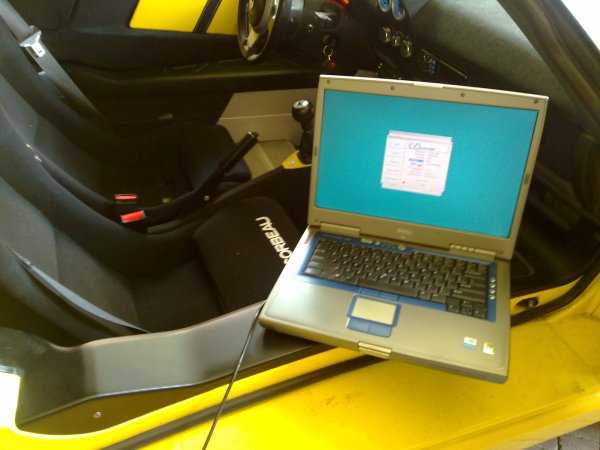 This software upgrade adds the parts necessary to model a throttle body different from the standard 58mm one. But first, change the throttle body itself for the 65mm version (GM partnumber 12580195). 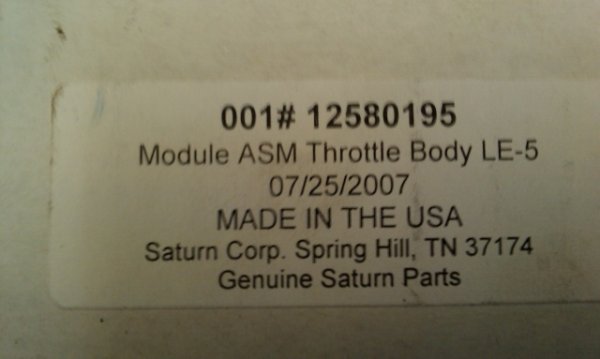
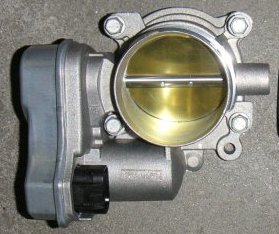 First disconnect the samco hose. 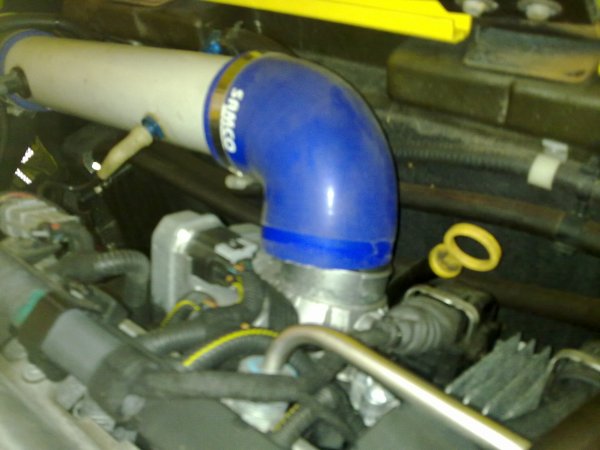 And remove the throttle body. 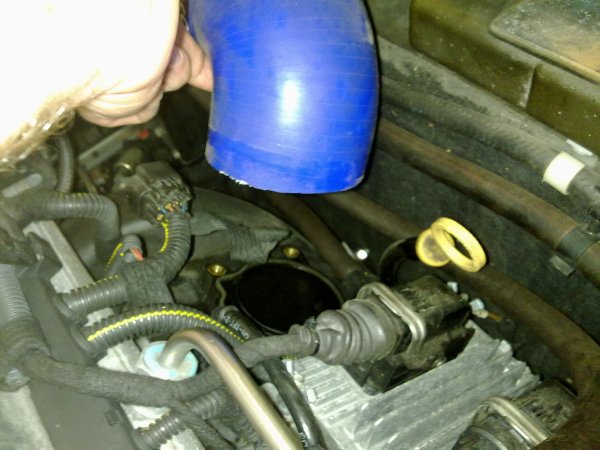 Place the throttle body and reconnect 😊. 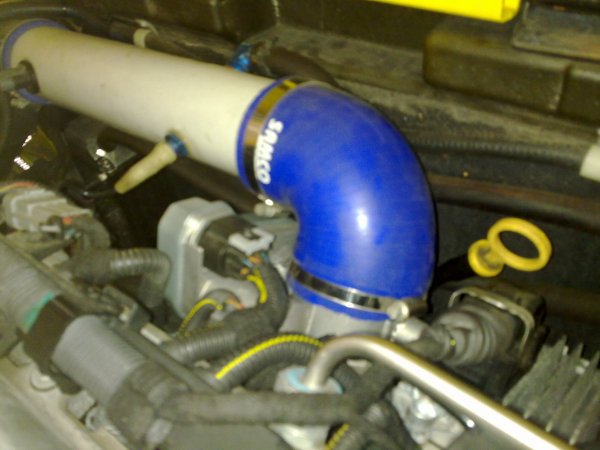 Now for the calibration part. The OBDTuner software now has 2 presets for the 58mm and the 65mm throttle body characteristics. These settings model the throttle body but keep all the safeguards in place. As the calibration of a throttle body isn't trivial, it is only available as a preset. 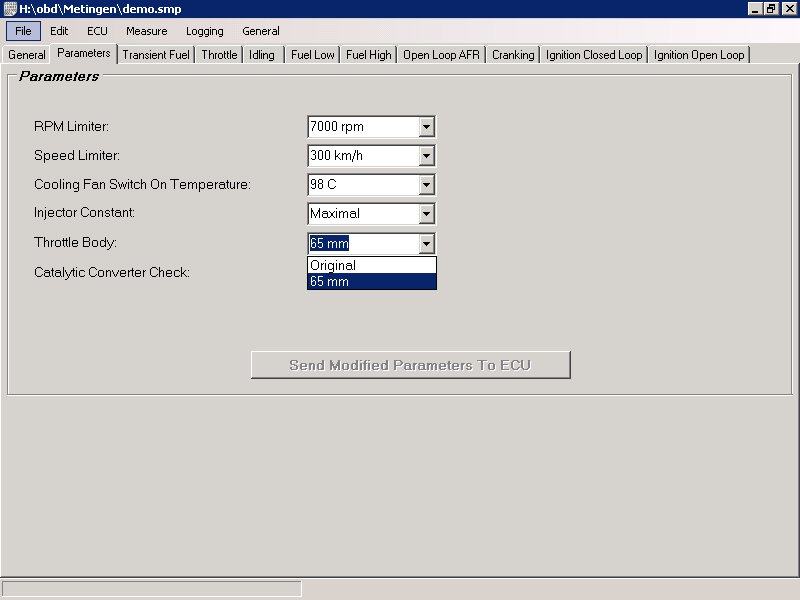 As many know, the standard speed with which the throttle valve opens is pretty slow (over 2 seconds to fully open). Fortunately, this is something which is controlled in software and can be changed within the ECU. In the top of the screen below you can find the throttle speed configuration. 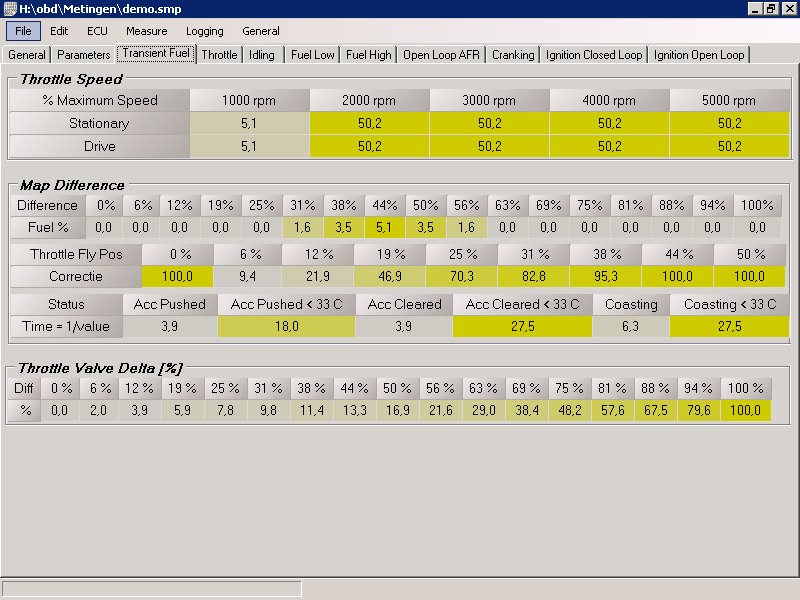 This setting is much faster then the standard configuration in the ECU, getting near instantaneous throttle opening. But of course nothing comes for free. Opening the throttle this fast allows for a good amount of air to enter the engine. Just like with a carburetor there is an acceleration enrichment routine in the ECU. This adds extra fuel when the throttle valve is opened. However, the standard tables in the ECU can't compensate for the high speeds we're configuration now. Peter reconfigured the scaling of the tables in the ECU and made them programmable. Those are the tables in the middle and lower screen. Basically there is a table based on MAP change in the intake manifold and the change in % the throttle is opened. I won't go into details on the calibration of these tables, it isn't very simple to do. But when you get it right, the throttle response is amazing! When using heel & toe or just blipping the throttle the engine just revs instantly! The last major update in the new firmware is the throttle pedal vs. throttle valve response. This is now fully configurable. Basically you can now program any configuration on how the engine should respond to the throttle pedal. From slow, to very, VERY quickly. 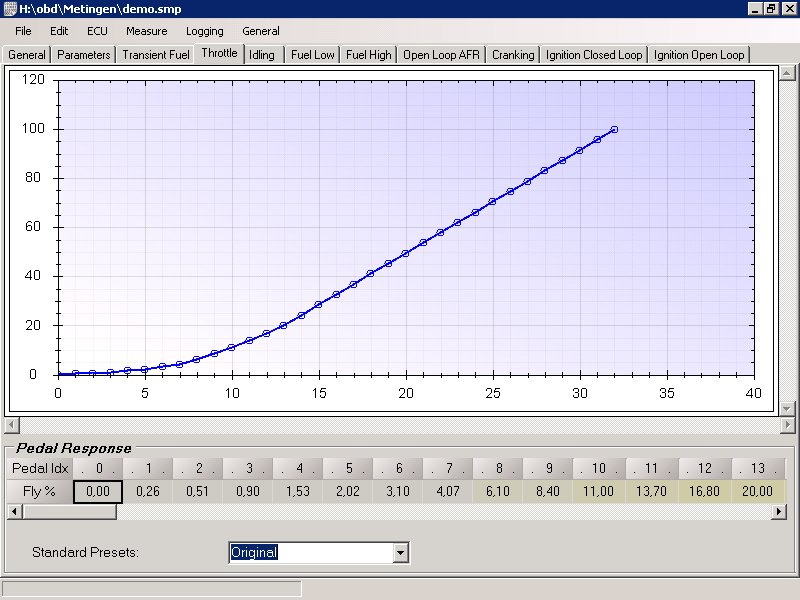 In the above screenshot is the default response graph. This already is pretty quick, but you can increase or decrease it to what you want. The software even includes some presets. 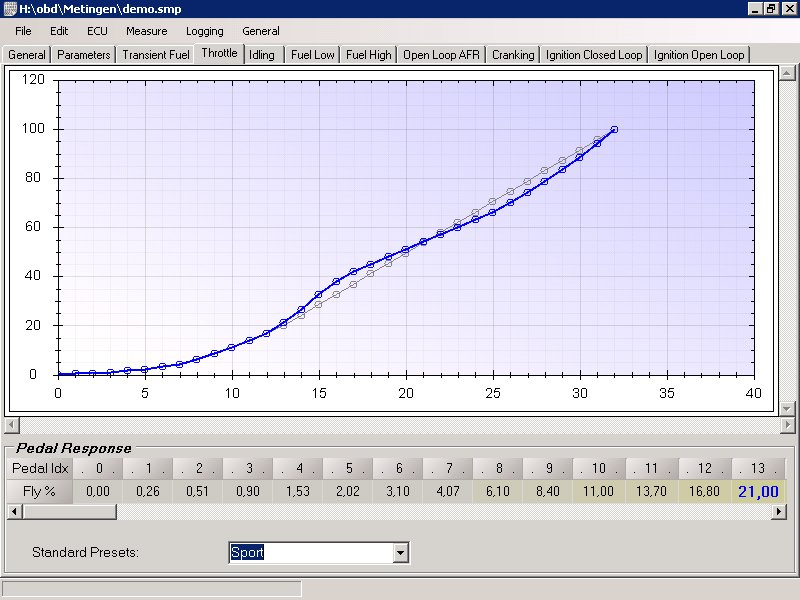 This is the standard response compared to the sports preset. I wouldn't want to try that one with the 65mm throttle body. The standard response is even too quick for my liking. But for the 58mm throttle body the sports setting might be interesting. Lastly there is the issue of power delivery. Is the standard 58mm throttle body a restriction in the intake system? I didn't try a comparison myself, but Peter did on his car. Below is a power graph comparing the 58mm and 65mm on his car (2.4 intake, 70mm intake pipe, k&n filter, full Tullet exhaust including manifold). 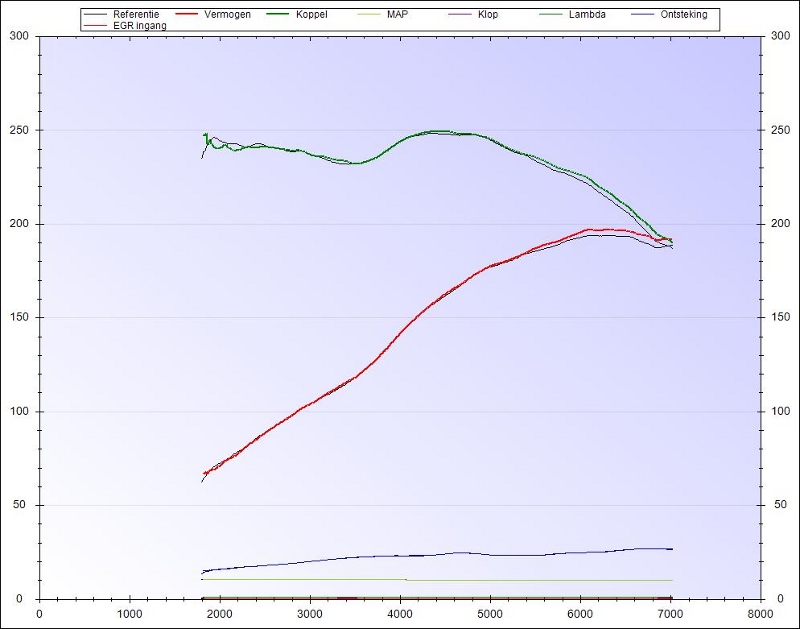 As you can see in the graph, there seems to be a restriction from around 5400 rpm. On peak there is a difference of about 4hp. All in all the 65mm throttle body with the new software is a big improvement. It transforms the engine response to VERY sporty 😊. |


